Maximum slip, minimum cost
The Flaxseed & Marshmallow Slip
- Whole flaxseed
- Marshmallow root
- Water
Detangling
Shed hair is normal. A handful of snapped mid-strands is not. The difference is almost always slip, sections, and direction — three things you can fix on your very next wash day without buying anything.


Sound familiar?
There are two kinds of hair coming out. Shed hair has a small white bulb on the end and it was leaving anyway — you just collected a week of it at once. Snapped hair has no bulb, and that's the breakage you're paying for.
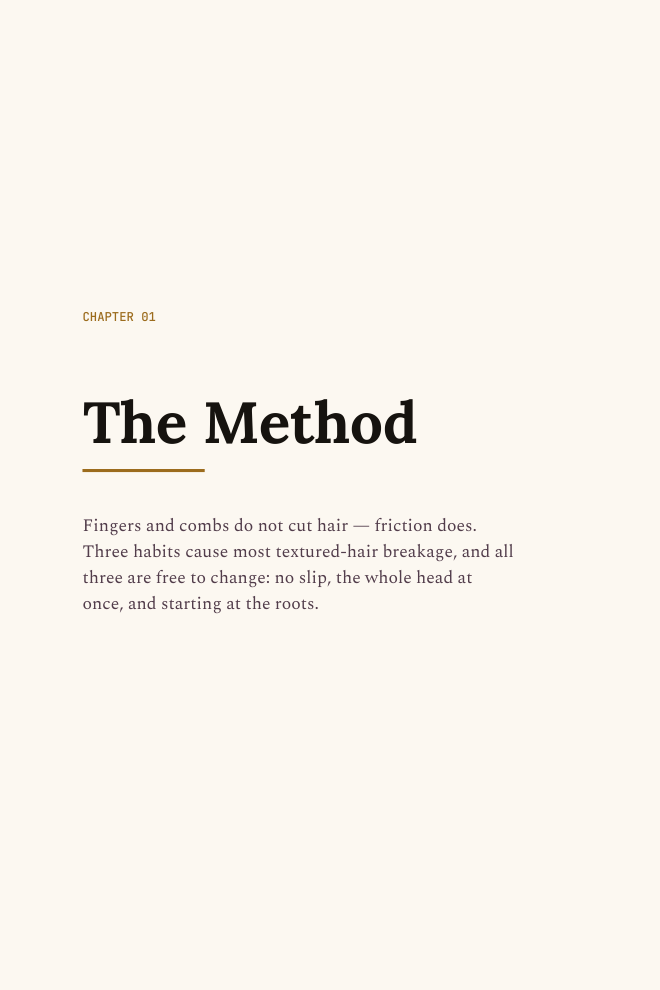
Almost all of it comes from three habits: detangling with no slip, working the whole head as one piece, and starting at the roots. Change those three and the session gets shorter and the sink gets emptier, with the same hair and the same hands.
Sample pages
Each slip recipe says what it's for, what goes in it, how long it takes, and how long it keeps in the refrigerator.
Maximum slip, minimum cost
Dry, matted sections
Refreshing between wash days
12 recipes and methods inside
Every recipe lists its shelf life. Homemade slips contain water and no preservative — they belong in the refrigerator and they do expire.
What's inside

It fixes the three habits behind most textured-hair breakage, and none of the three costs a dollar to change.
Fingers and combs don't cut hair — friction does. Slip is what removes the friction, and you can make it from a bag of seeds.
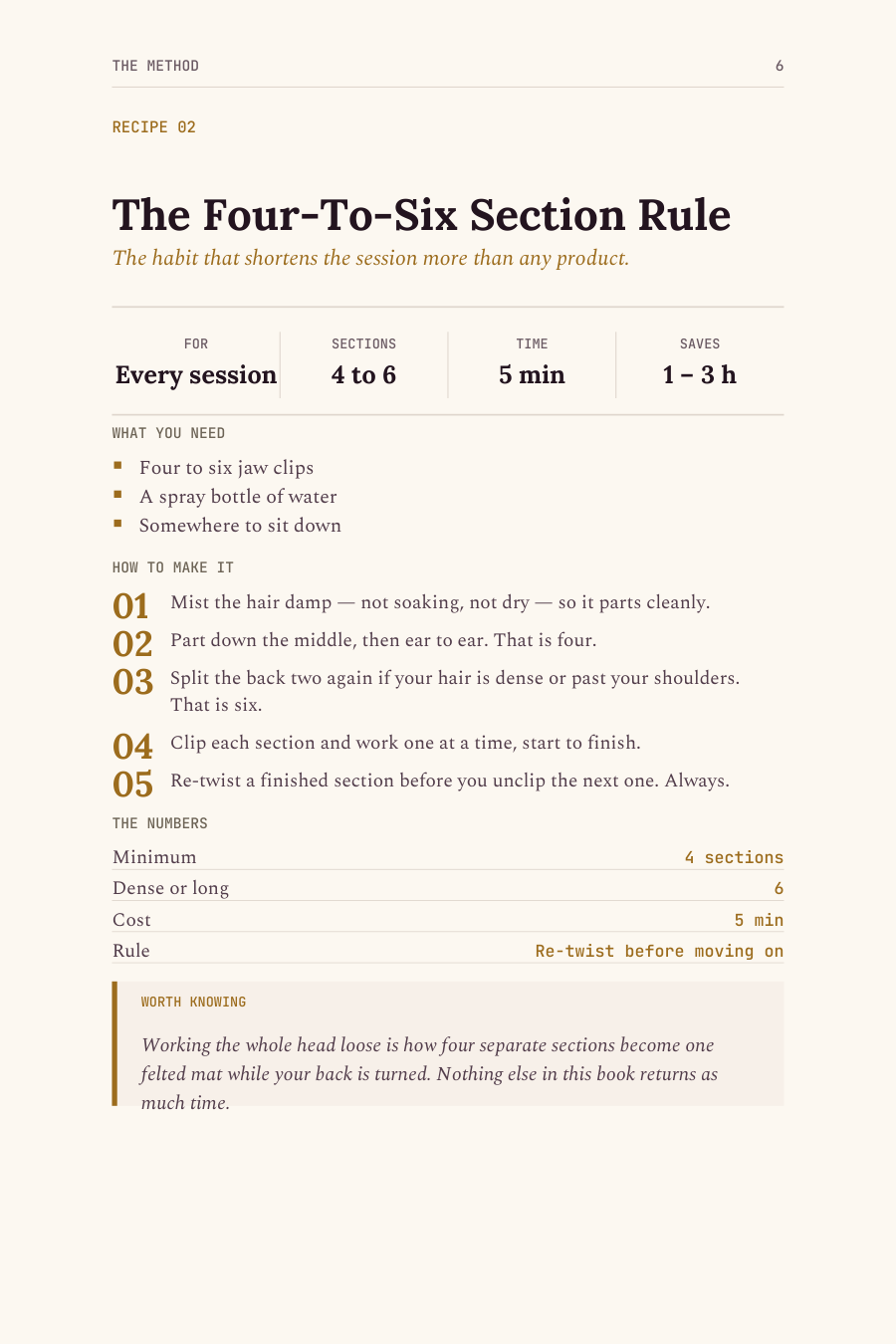
Four to six sections is the difference between a session that ends and a session that defeats you.
Starting at the roots pushes every tangle down into a bigger one. Ends first is the whole trick.
What you get
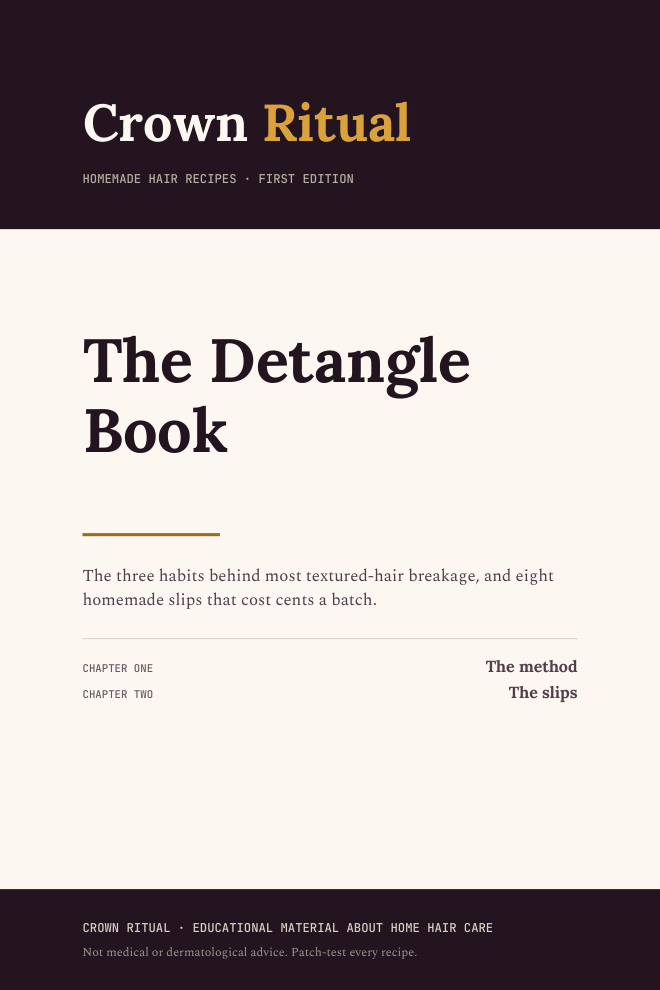
The detangling method — slip, sections, direction — plus six homemade slip recipes and a plain guide to which tools earn their place.
Pages shown are from the actual guide. This is a digital product (PDF) — no physical book is shipped.
The Detangle Book is the shortest book in the system and the one that changes the most on day one — how to read shed against snapped, how to section, which direction to work in, which tools to keep, and six slip recipes that cost cents a batch.
What you get
Instant digital download. One-time payment of $10.00, billed securely by Digistore24. For education only — results vary. Always patch-test. This is not medical or dermatological advice.
Yes. Shedding is a normal part of the hair cycle, and washing weekly means you collect several days of it in one session. The book teaches you to tell that apart from snapped strands, which are the ones worth fixing.
It depends on your texture and how much slip you have, and the book gives you the rule for each rather than a single answer — because the wrong one for your hair is exactly where breakage comes from.
No. The book is honest about which tools do real work, which are optional, and which ones don't belong near textured hair regardless of what they cost.
No — it's a digital guide (PDF), emailed to you right after purchase.
No. It's educational content only. Sudden or patchy hair loss belongs with a board-certified dermatologist.
You're protected by a 60-day money-back guarantee — email us within 60 days for a full refund.
Slip, sections, direction. Three changes, no shopping, and a visibly different sink at the end of the session.
Yes, I want fewer strands in the sink — Only $10.00Payment processed securely by Digistore24. · 60-day money-back guarantee